
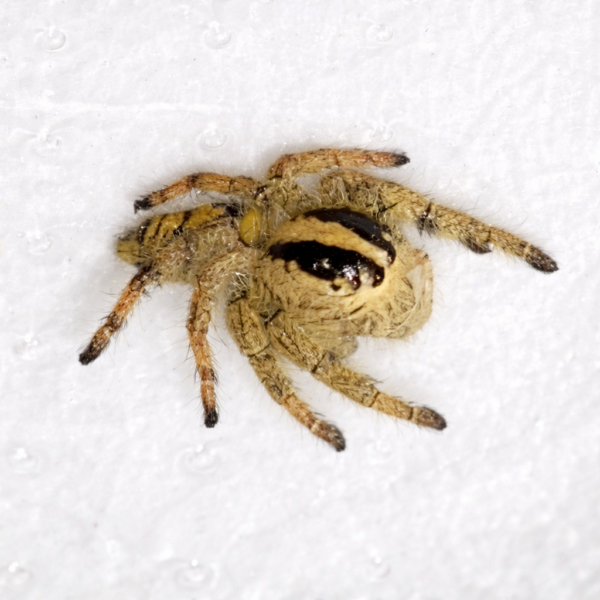
hyllus diardi
€ 25,00
De Hyllus diardi is one of the largest and most impressive jumping spiders in the world. They originate from the tropical rainforests of Southeast Asia.
1. housing
- Enclosure type: Use a vertical enclosure (minimum 20x20x30 cm for an adult). Ensure that the opening is at the front or side; jumping spiders often make their sleeping sacs (webs) at the top, and you do not want to tear these when opening.
- Setup: They are very visually oriented. Provide plenty of climbing opportunities such as branches, cork, and (artificial) plants.
- Light: These spiders need a lot of light during the day to hunt effectively. An extra LED light above the enclosure is strongly recommended.
2. climate
- Temperature: They love warmth. Optimal is between 25°C and 28°C. Optionally, use a heating mat on the side of the tank if the room temperature is too low.
- Humidity: Relatively high, between 70% and 80%. Lightly spray one wall of the enclosure every day with a fine mist sprayer. Ensure that no large puddles form in which the spider can drown.
3. food
- Diet: Active hunters. They readily accept fruit flies, small grasshoppers, and moths.
- Frequency: Young spiders (slings) eat every other day; adults every 2 to 3 days. Note the size of the abdomen: if it is nicely round, the spider is well-nourished.
- Water: They drink from the sprayed water droplets on the walls or leaves.
4. Behavior
- Intelligence: Hyllus diardi is known for their curious nature. They often look directly at you and follow movements outside their terrarium.
- Moulting: When the spider retreats into a thicker spun cocoon and does not eat for days, it is likely about to molt. Absolutely do not disturb the spider at this time.
5. Important point of attention
- Compared to the popular Phidippus regius, the Hyllus diardi is slightly more sensitive to fluctuations in temperature and humidity. A constant environment is the key to success.
Related products
-
portia sp.
€ 30,00 -

Stegodyphus lineatus
€ 20,00